Introduction
Pipeline infrastructure plays a critical role in transporting water, wastewater, gas, and industrial fluids across cities and industries. Over time, these pipelines deteriorate due to corrosion, cracks, root intrusion, and structural wear. Traditionally, repairing or replacing damaged pipelines required extensive excavation, high costs, and long project downtime. However, with advancements in trenchless technology, **Pipeline Rehabilitation CIPP Liner (Cured-In-Place Pipe lining)** has emerged as one of the most efficient and cost-effective solutions for restoring damaged pipelines without full replacement.
This guest post explores the importance of pipeline rehabilitation, how CIPP lining works, its benefits, applications, and why it has become a preferred method in modern infrastructure maintenance.
What is Pipeline Rehabilitation CIPP Liner?
**Pipeline Rehabilitation CIPP Liner** is a trenchless pipe repair technique used to restore the structural integrity of existing pipelines. CIPP stands for **Cured-In-Place Pipe**, which involves inserting a resin-saturated liner into a damaged pipe and curing it to form a new, seamless pipe within the old one.
Instead of digging up and replacing old pipes, engineers rehabilitate them from the inside. This method is widely used in sewer systems, stormwater drains, industrial pipelines, and potable water lines.
The CIPP process creates a durable, corrosion-resistant pipe that extends the life of the existing infrastructure by several decades.
How CIPP Liner Technology Works
The Pipeline Rehabilitation CIPP Liner process typically involves several key steps:
1. Inspection and Cleaning
Before installation, the pipeline is inspected using CCTV cameras to assess damage and blockages. High-pressure water jetting is then used to clean debris, roots, and sediment.
2. Liner Preparation
A flexible felt or fiberglass liner is impregnated with thermosetting resin (commonly epoxy, polyester, or vinyl ester). This liner is designed to fit snugly inside the existing pipe.
3. Insertion into Pipeline
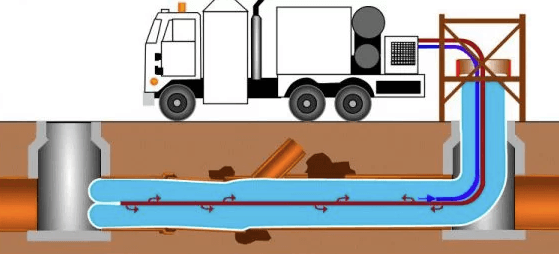
The resin-soaked liner is inserted into the damaged pipe using inversion or pull-in methods. It is carefully positioned along the full length of the affected section.
4. Curing Process
The liner is cured using hot water, steam, or UV light. This hardens the resin, forming a rigid, jointless new pipe inside the old one.
5. Final Inspection
Once curing is complete, another CCTV inspection ensures the liner is properly installed and the pipeline is fully restored.
Key Benefits of Pipeline Rehabilitation CIPP Liner
1. Trenchless Technology Advantage
One of the biggest benefits of CIPP lining is that it is a **trenchless pipeline rehabilitation method**. This means minimal or no digging is required, reducing disruption to roads, buildings, and the environment.
2. Cost-Effective Solution
Compared to full pipe replacement, CIPP lining significantly reduces labor, excavation, and restoration costs. It is especially economical for large-scale municipal projects.
3. Extended Pipeline Lifespan
CIPP liners can extend the life of existing pipelines by 50 years or more. The new pipe is resistant to corrosion, chemical attack, and root intrusion.
4. Improved Flow Efficiency
The smooth interior surface of the cured liner reduces friction, improving flow capacity and reducing blockages.
5. Environmentally Friendly
Since it minimizes excavation, CIPP lining reduces carbon emissions, waste generation, and environmental disruption, making it a sustainable rehabilitation method.
6. Quick Installation
Pipeline downtime is significantly reduced. Many CIPP projects can be completed within hours or days instead of weeks or months.
See also: Franchising: A Comprehensive Guide to Building a Successful Business Model
Applications of CIPP Liner in Pipeline Rehabilitation
The versatility of **Pipeline Rehabilitation CIPP Liner** makes it suitable for various industries and infrastructure systems, including:
Municipal Sewer Systems
CIPP is widely used for repairing cracked or leaking sewer lines without disrupting urban areas.
Stormwater Drainage Systems
It helps restore storm drains that are damaged due to erosion or aging infrastructure.
Industrial Pipelines
Factories and industrial plants use CIPP lining for chemical-resistant pipeline rehabilitation.
Potable Water Pipelines
Special food-grade resins allow safe rehabilitation of drinking water pipelines.
Gas Pipelines (Non-Pressurized Sections)
Some low-pressure gas pipelines also benefit from trenchless rehabilitation methods.
Types of CIPP Liners Used in Rehabilitation
Different types of liners are used depending on project requirements:
Felt-Based Liners
Commonly used for standard sewer and drainage rehabilitation projects.
Fiberglass Reinforced Liners
Provide higher structural strength and are used for high-pressure or large-diameter pipelines.
UV-Cured Liners
These liners are cured using ultraviolet light and offer faster installation and reduced energy consumption.
Why Choose Pipeline Rehabilitation CIPP Liner Over Traditional Methods?
Traditional pipeline replacement involves excavation, traffic disruption, environmental damage, and higher costs. In contrast, CIPP lining offers a modern, efficient, and less invasive alternative.
Key reasons include:
* No need for large-scale digging
* Reduced project timelines
* Lower operational and restoration costs
* Long-term durability and performance
* Minimal impact on surrounding infrastructure
As cities continue to expand and infrastructure ages, trenchless solutions like CIPP lining are becoming essential for sustainable urban development.
Challenges and Considerations
While Pipeline Rehabilitation CIPP Liner offers many advantages, certain factors must be considered:
* Proper pipe inspection is critical before installation
* Resin selection must match pipeline conditions
* Skilled technicians are required for correct installation
* Not suitable for fully collapsed pipes
Despite these challenges, the benefits far outweigh the limitations when properly executed.
Future of Pipeline Rehabilitation Technology
The future of pipeline maintenance is strongly leaning toward trenchless technologies. Innovations in **CIPP liner materials, robotic inspection systems, and UV curing methods** are making pipeline rehabilitation faster, safer, and more efficient.
As infrastructure continues to age globally, demand for Pipeline Rehabilitation CIPP Liner solutions is expected to grow significantly in municipal, industrial, and commercial sectors.
Conclusion
**Pipeline Rehabilitation CIPP Liner** has revolutionized the way damaged pipelines are repaired and maintained. By eliminating the need for excavation and providing a durable, long-lasting solution, CIPP technology offers unmatched efficiency, cost savings, and environmental benefits.
Whether used in sewer systems, storm drains, or industrial pipelines, CIPP lining ensures reliable performance and extended infrastructure life. As cities strive for smarter and more sustainable infrastructure solutions, trenchless pipeline rehabilitation will remain a key technology shaping the future of underground utility management.